AI Workflow Automation
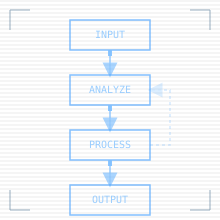
Identifying where AI adds genuine value to operations. Workflow analysis, tool selection, implementation planning—focused on practical outcomes over hype.
Auditing processes for automation opportunities, evaluating AI tools against specific requirements, and building implementation approaches with measurable outcomes. Concrete plans rather than generic "AI strategy".
Systems Architecture
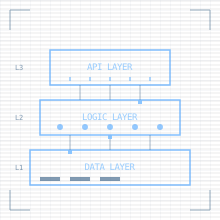
Designing and building AI-integrated systems. Multi-provider LLM orchestration, data pipelines, and infrastructure built with flexibility in mind.
Building systems that avoid lock-in. Provider-agnostic LLM integration allows switching between Claude, GPT, or local models without rewriting the stack. Human-readable data formats, comprehensive exports, and documentation for long-term maintainability.
Process Analysis
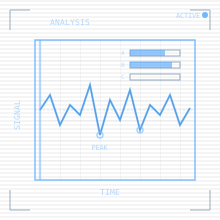
Deep-dive into workflows to find automation opportunities. Document processing, communication analysis, decision support systems.
Starting from how teams actually work—not how org charts say they should—mapping information flows, identifying bottlenecks, and designing AI augmentations that fit into existing processes rather than requiring complete overhauls.
ReCog Engine
Text intelligence platform for processing unstructured documents at scale. Extracts patterns, generates insights, and builds understanding from document corpora.
Domain-agnostic core with adapters for legal, logistics, research, and operations. See the Projects page for technical details and current status.
Approach
Field Background
10 years law enforcement, legal sector workflow design, emergency coordination.
Hands-On Building
Writing code, architecting systems, deploying infrastructure—not just planning.
Measured Outcomes
Projects start with success metrics. If it can't be measured, it doesn't get built.
Data Sovereignty
Export everything, switch providers, no lock-in. Control stays with the data owner.